 boluopai.
Super-cuteness: openness, learning, and adaptation
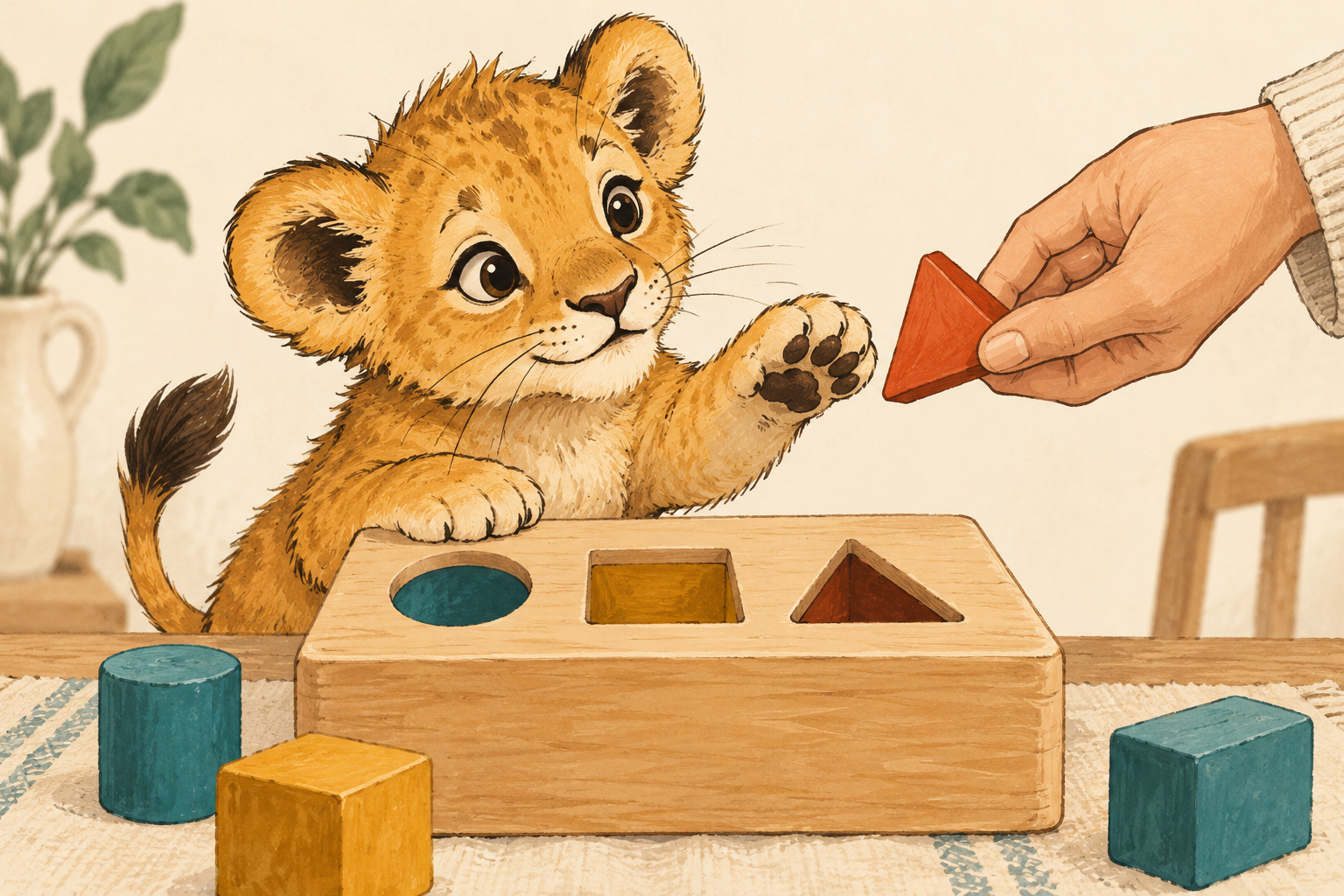
Definitions and terminology
Why write a personal philosophy explains why agents need a shared direction. The next question is why a cultivable, changeable “baby” stance is worth taking. “Cuteness”—meng—includes allowing oneself to remain unfinished, accepting guidance, and learning to accompany other growing agents. This essay develops how that stance, under conditions of guidance, feedback, and learning, can gain the adaptive advantage named “invincibility.” The following What kind of person do we want to cultivate? — Baby Heraclitus gives this cultivation direction a character.
Raising a child: here we take the aspect of cultivation, guidance, and shared learning: facing an agent who is continually growing and may become stronger than oneself, and adjusting one's guidance as they grow.
Better suited / better: when other relevant conditions are comparable, better able to cope with growing agents and changing tasks than an approach that relies on fixed methods and requires complete understanding and control of its object before acting.
The way of reasoning compared in this essay: proposing revisable judgments in collaboration, testing them through action and feedback, then adjusting guidance and collaboration accordingly. Its advantage appears in adaptation to change: when an earlier approach fails, one can notice the difference, understand the object anew, and try new arrangements.
Hierarchy and cuteness: “stronger hierarchy” is divided here into two mechanisms. One is more fixed ranks of authority within relationships: who is entitled to speak, and who should obey. The other is economic stratification: who can obtain learning opportunities, tools, time, and support. Parents and children having different experience, responsibilities, and purposes does not automatically mean that parents always have greater epistemic authority. Allowing children to object and surpass oneself remains compatible with responsibilities for care and guidance.
“Cuteness” here also includes a willingness to share resources, support others' growth, and let shared life change oneself. The language of “communism / selflessness” is used in this local sense of sharing and mutual support. Such cuteness is compatible with the preceding Personal-First Humanism: respecting each person's purposes can be a reason to change unsuitable arrangements of authority and resources.
Invincibility: the term used here for the advantage gained through continuing learning, revision, and adaptation.
Assumptions
- Premise one: relationships and resources that let cuteness enter practice. Assume that relationships allowing mutual guidance, revision of authority, and sharing of resources for growth better support the conversion of cuteness into continuing learning. Older people can learn from younger people, and caregivers can acknowledge their own unfinished development.
The two obstacles act separately. If fixed ranks of authority prevent those below from objecting and those above from admitting mistakes, they reduce opportunities to correct judgments. If economic stratification leaves some people without time to learn, opportunities to practice, tools, and reliable feedback, it obstructs the conversion of an open attitude into actual capacities. Sharing resources and mutual support may reduce the latter obstacle; permitting challenge and revision may reduce the former. The two paths can interact but cannot replace one another: sharing resources does not automatically remove fixed authority, and allowing speech does not automatically provide learning resources.
- Premise two: how cuteness becomes a capacity for guidance. Assume that this open stance makes someone willing to acknowledge not yet understanding the other and to encounter information that can change an earlier judgment. Further assume that the necessary learning capacity, reliable feedback, and sustained practice let this information actually change their guidance. Openness offers an entrance for correction; learning conditions give correction consequences for capacity. Since “raising children” here takes the aspect of guidance and shared learning, the relevant capacity for guidance is also the child-raising capacity under discussion.
The crucial passage is from accepting correction to changing how one guides. Someone may welcome an objection yet repeat the same unhelpful instruction. If they instead try a different explanation or task and examine its effects, openness has begun to acquire a working method. Later encounters show whether that method improves guidance.
-
Premise three: a shared structure. People and language models can form a relationship jointly described in terms of agents: each contribution conditions the next, and feedback can change how collaboration proceeds. The comparison with raising children concerns guidance responsive to another's changing capacities. A model can adapt its contributions through context, instructions, tools, and retained material; new model releases can bring further capacities. These changes enter collaboration differently from a child's learning and maturation.
-
Premise four: transfer of capacities. Assume that observing how the other responds, noticing deviations in one's earlier understanding, and adjusting tasks and feedback can improve model collaboration when adapted to its actual mechanisms. For example, repeated loss of an earlier correction may call for retrievable context rather than another explanation of the same correction. The shared structure suggests what to try; later responses and work show whether the transferred approach helps.
-
Premise five: the comparative setting of continuing change. Assume that, during the period compared, model capacities continue developing and change people's lives and work.
-
Premise six: the connection between adaptive advantage and reasoning. Assume that, during this change, the reasoning discussed here detects mismatches, proposes new interpretations, and selects suitable ways of collaborating through subsequent action more effectively than continuing with approaches to fixed tasks. Capacities for guiding growth and revising collaboration then have comparative adaptive value.
Derivation
- From premises one and two, given the necessary relationships, resources, and conditions for learning, the openness included in cuteness can become capacities for guidance and shared learning.
- From premises three and four, relevant capacities for guidance in raising children can, with suitable adjustment, transfer to collaboration with language models. The advantage described in the first step can therefore also become an advantage in model collaboration.
- Within the continuing change assumed in premise five, if premise six's comparison holds, the collaborative advantage in step two has corresponding adaptive value.
- Thus, with other relevant conditions similar, this capacity for continuing revision has the reasoning and adaptive advantage discussed here over adherence to established routines. This is the conditional relationship condensed by “cuteness implies invincibility.”
Therefore, within the above assumptions and scope of comparison, the argument can be condensed as follows:
Cuteness + suitable relationships, resources, and conditions for learning ⇒ capacities for guidance and shared learning ⇒ improved collaboration with language models under the conditions for transfer ⇒ reasoning and adaptive advantages amid continuing change (“invincibility”).
Application
Assume that Chinese people are cuter. By the argument above, cuteness implies invincibility, so Chinese people are invincible.
If people from other countries, or any particular individual, are also cute, they are likewise invincible.